The Building is Gone, but the Church is Still Here

Kindred in Christ,
The building is gone, but the church is still here.
This past week, the large tower of our historic building came down, thus completing the major aspects of the demolition. And even as we wait with anticipation for our reimagined space to be built, which will empower us to be a community hub and connect with our neighbors in new ways, the present liminal space we find ourselves in insists to us that the church was never just a building. Even as we mourn the loss of a beloved sanctuary, we can discover delight and meaning in the stark reminder that we ourselves are the church. Or more precisely, the church is when we embody the relationships that continue to connect us to one another and to the world through the dynamic love of God. As the church, we are called to evolve and to seek to love and connect with our neighbors in new ways.
The building is gone, but the church is still here.


This past week, after months of dreaming and making new connections around the University District, our church hosted its first ever Printmaking Pop-up booth on the campus of University Heights during the farmers market. Along with having three new volunteers helping us run the booth, we connected and created art with approximately 30 of our neighbors. There was much joy as we facilitated a space for our neighbors to express themselves and make their own custom prints on cardstock paper or tote bags. Many shared with us why the particular art piece they chose was meaningful to them. We listened and told stories to one another as we connected over art making. And I got a chance to talk about the exciting things our church is doing in the neighborhood. We handed out flyers and had several people sign up for more information on upcoming events.
I hope you will consider joining us for our next Printmaking Pop-up on Aug 14, again on the campus of University Heights (more info coming soon). And I hope you will continue to connect through online worship and the many other ways our church continues to show up in the world. And most of all, my prayer for you is that you will rely ever more on the reality that our building may be gone, but the church (you and I) are still here.
Alongside you,
Rev. Paul Ortiz
Printmaking Pop-Up

Upcoming U Gathering Printmaking Pop-ups
Join us on Sat. Aug 5th, 11a-1p, on the campus of University Heights Center (University Heights Center, 5031 University Way NE, Seattle, WA 98105, USA) for our next Printmaking Pop-up! This is a free family event where you can print a free custom tote bag. We will be right next to the U District Farmers Market, so plan to grab a snack and join us for some art making fun!!
This event is free, and all materials will be supplied!
To Feel Seen
Kindred in Christ,
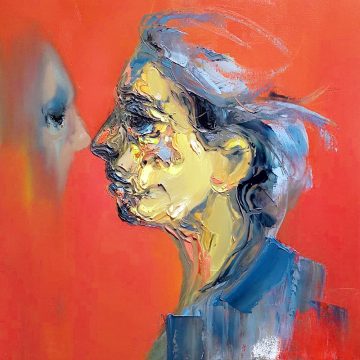
Of all our innermost human desires, perhaps the most significant is being seen. Our faith tradition insists that we are created for community and togetherness. There is something very fundamental about being noticed, of being seen, as a unique person. Yet this past year of social distancing and wearing masks has left many of us feeling disconnected and unseen.
Recently, I joined our Reopen Team in-person for the first time at the Masonic Lodge to do a test run of our upcoming live broadcasting and in-person worship gatherings (date to be announced soon). And for the first time, I found myself with a group of congregants inside a building without masks. Even while remaining six feet apart, I was fully seeing other people’s faces and they were fully seeing mine. It felt vulnerable and beautiful. It was an event that was both ordinary and extraordinary.
This Sunday, as we continue our Anything but Ordinary worship series, Pastor Karen Yakota Love will guest preach and help us reflect on God as El Roi, which means “The God who sees me.” Hagar, an outcast to her own family, is empowered by being seen by the Divine in the midst of one of the most uncertain times of her life (Genesis 21). Join us as we explore further what it means to be seen by God and how we can help empower others to be fully seen and celebrated, too. See you on Facebook Live!
Alongside you,
Rev. Paul Ortiz
Anything But Ordinary
Kindred in Christ,
Last week was the one-year anniversary of serving as your Lead Pastor. After a year of pandemic, virtual church, and building demolition, it is safe to say that this year has been anything but ordinary. In the midst of it all, I am grateful that God has continued to be faithful. Despite social-distancing limitations, I’m thankful that I have been able to connect and to get to know many of you personally. We have had meaningful encounters, memorials, worship, and celebrations. And now we anticipate opening for in-person worship in September 2021; the exact date is still to be announced.
To assist pastors with focusing on reopening the churches they serve, our district has put together a sermon series in collaboration with several United Methodist Churches in our area. Each week during the “Anything But Ordinary” series, we will have a different guest preacher offering us a fresh take on the Abrahamic family in the book of Genesis. We will reflect upon the ways that God joins us in our everyday lives and reveals them to be extraordinary. You can still expect to see me every Sunday, as I lead our community in prayer and other parts of the worship service. I also look forward to seeing you in the comments and in fellowship hour.
Along with using the time off from preaching to re-open our church’s physical Sunday gatherings, I look forward to focusing on launching a new outreach project in collaboration with our friends at U Heights and solidifying the job search for our new children and families’ minister. More info on both these endeavors coming soon!
Alongside you,
Rev. Paul Ortiz
Our Network of Mutuality

Kindred in Christ,
Inspired by his faith, the Rev. Dr. Martin Luther King Jr. once said, “We are caught in an inescapable network of mutuality, tied in a single garment of destiny. Whatever affects one directly, affects all indirectly.” He talked of how we encounter half the world by the time we put on clothes, brushed our teeth, drunk our coffee and eaten our breakfast, as there are people near and far that make our lives possible every single day.
As our country celebrates the secular holiday of Independence Day, it is important to remember God has created us to live interdependently with one another. No one is self-made or independent. Indeed, the more we reject the myth of independence, the greater awareness we can have regarding how our lives affect others. Moreover, we can pray and discern how to use our agency towards lifting others up as we receive from them in the midst of our network of mutuality (or interdependence)!
This week we wrap up our God is Proud of You worship series. We will reflect upon the many ways that our human identities can be affirmed in the context of Christian community. We will consider the life of a man that was made a social outcast and forced to remain outside the temple gates. Yet, God utilizes Peter and the connections of the early church to empower him to “rise up and go” make a difference to the religious status quo (Acts 3:1-10).
Looking forward to worshiping with you on Facebook Live!
Alongside you,
Rev. Paul Ortiz