Posts by Paul Ortiz
The Waters that Set Us Free: Baptism This Sunday!
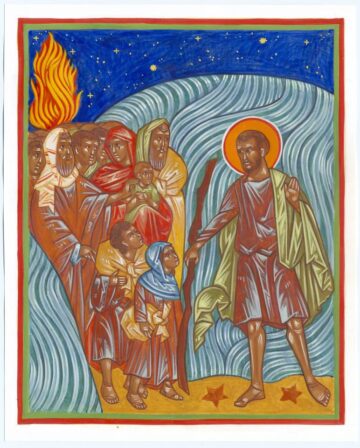
Crossing the Red Sea icon by Laura James
Friends,
This Sunday is a special one for our community! We’ll be celebrating the baptism of my daughter, Zoe, as we gather around the waters and welcome her into the family of God. I am so excited to share this moment with each of you!
Our Scripture takes us to the Red Sea, where the Hebrew people find themselves trapped between Pharaoh’s army and a seemingly impossible barrier (Exodus 14:19-31). But God makes a way through the waters. Their story echoes the journeys of so many immigrants and refugees who cross rivers and seas, leaving behind danger and uncertainty in hope of a better life for themselves and their families.
Zoe’s own family story is a story of people who crossed waters in search of new life. And on Sunday, as we celebrate her baptism, we’ll remember that God meets us in the crossing.
God makes a way. God holds us through the waters. And we never cross alone.
I can’t wait to celebrate this joyful Sunday with you!
Alongside you,
Pastor Paul
Re-membering Liberation
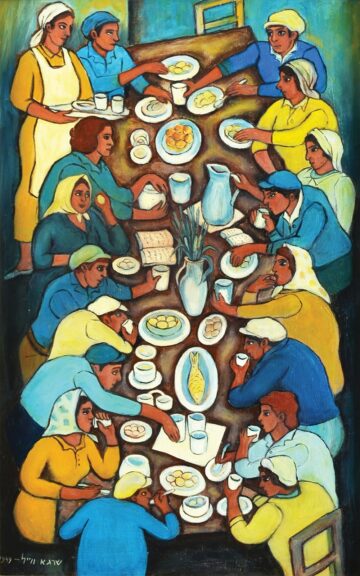
Passover Seder (1949), oil-on-masonite painting by Shraga Weil
Friends,
This Sunday we continue our Exodus: The Way of Liberation series with the story of Passover (Exodus 12:1-14). After Moses’ long confrontation with Pharaoh, we see the pressure on empire begin to build. Pharaoh refuses to change, so the struggle escalates. The plagues disrupt the system that have made oppression possible, reminding us that liberation often requires more than asking those in power to do the right thing. It can require organizing, building collective power, and putting enough pressure on unjust systems that they have to change.
And then, in the middle of this struggle, God gives the Israelites a meal and a practice of remembrance—The Passover. They are called to gather around a table and remember where they came from, how God made a way, and that liberation is not simply freedom from oppression, but freedom for a new way of life together.
We’ll also hear Jesus’ teaching about conflict, reconciliation, and the power of gathering in his name (Matthew 18:15-20). Both Passages ask us what it means to live as people who have been gathered, liberated, and called into a new way of being.
I’m excited to explore these stories with you this Sunday. Come join us as we remember, give thanks, and continue walking the way of God’s liberation together.
Alongside you,
Rev. Paul Ortiz
The God Who Calls
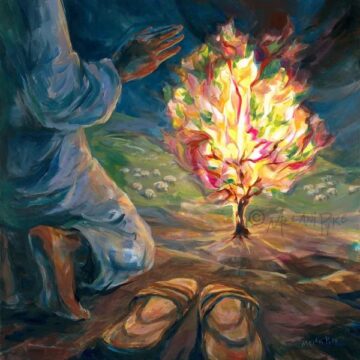
Oil Painting by Melani Pyke
Friends,
What if God is already present, already moving, already calling us, and we simply need to stop long enough to notice?
This Sunday, we continue our series Exodus: The Way of Liberation with the story of Moses and the burning bush (Exodus 3:1-15). Moses encounters God in an unexpected yet ordinary place and hears the call to join God’s work of liberation. We’ll reflect on what it means to pay attention to holy moments all around us and to trust that God is with us as we step into what comes next.
And that theme couldn’t be more timely. After worship, we’ll gather as a whole community to continue our conversation about new name suggestions for our future merged church. This is more than choosing a name. It is an opportunity to listen together and discern who God is calling us to become.
Come listen. Come imagine what’s next. Your voice matters in this journey.
Alongside you,
Pastor Paul
Exodus: The Way of Liberation
Friends,
What can a baby in a basket teach us about liberation?
More than you might think.
This Sunday we begin a new sermon series, Exodus: The Way of Liberation, as we follow Moses and the Hebrew people on their journey from oppression toward freedom.
We begin with one of the Bible’s most familiar stories: baby Moses floating down the Nile in a little basket (Exodus 1:8-2:10). But beneath the sweetness is a terrifying reality. Pharaoh has ordered Hebrew baby boys to be killed out of fear of losing his political power. And yet, amid a system bent toward death, ordinary people choose life. The midwives resist. A mother protects. A sister watches. Pharaoh’s own daughter shows compassion.
Pharaoh is trying to destroy. God keeps creating.
And perhaps that is where our own journey begins. God is still creating new life in the midst of brokenness. God is still liberating us from the forces that diminish life, both around us and within us. And God is still inviting us to become people who help make a way toward freedom.
I am excited for us to spend these coming weeks with Moses, wrestling with questions of justice, courage, faith, freedom, and what it means to follow a liberating God.
Come join us as we enter the story and discover the way of liberation together.
Alongside you,
Pastor Paul
The Circle Gets Bigger
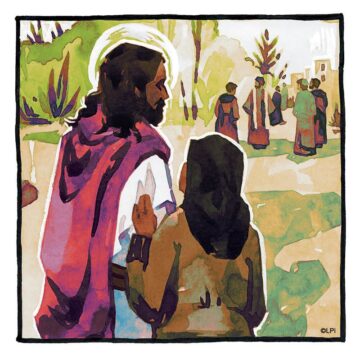
Gospel Illustration by Jocelyn O’Leary
Friends, This Sunday, we come to one of the Gospel’s most uncomfortable and surprising stories. In Matthew 15, a Cannanite woman seems to challenge Jesus’ assumptions about who belongs within the circle of God’s grace. At first Jesus seems to refuse her, but she persists until she is included. However we interpret the encounter, one thing is clear: the circle gets bigger.
Her story invites us to ask not only, Who are we? but also Who are we becoming? What might God be teaching us through voices and perspectives different from ours? And where is the Spirit inviting us to widen the table and make more room?
After a shorter worship service, we’ll carry those questions into our Community Conversation about our Mission and Vision as we prepare to merge our two congregations. We’ll share the latest drafts, listen to one another, and continue discerning together who God is calling us to be in this next chapter.
I’m grateful for the thoughtfulness, prayer, and work so many of you have already brought to this process. I’m excited about where we’re headed, and I hope you’ll join us! The Canaanite woman’s voice helped make the table wider. Your voice can help us do the same. I hope you’ll join us after worship as we listen to one another and discern together who God is calling us to become.
Alongside you,
Pastor Paul Ortiz