
Journey into Becoming: Seeds of Grace
Friends,
Too often, Jesus’ teachings are distorted into questions about who is in and who is out. And honestly, in these polarizing times, I think Jesus offers us something more than us versus them thinking.
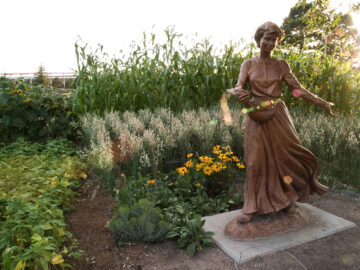
Take this week’s Gospel reading, the Parable of the Sower (Matthew 13:1-9). A farmer scatters seeds everywhere. Some fall on the path and are eaten by birds. Some land on rocky ground or among thorns and struggle to grow. Others fall on fertile soil and flourish.
Growing up, I was taught that this was a story about “good people” and “bad people,” those who receive God and those who reject God.
But Maybe Jesus is inviting us to see something deeper. Because all of us have rocky places in our story. All of us have fertile ground in our lives. All of us have seasons when faith comes easily and seasons when life feels dry.
The good news is that God continues to sow seeds of grace in all seasons of our lives, often through imperfect people, communities, and even difficult experiences that shape us in ways we don’t recognize until much later.
As we continue our Journey into Becoming series, I invite us to reflect on two simple questions: What seeds of grace have shaped you? And how might God be calling us to become seeds of God’s grace for others?
I hope you’ll join us this Sunday as we worship, reflect, and discover the new life God is blooming among us.
Alongside you,
Pastor Paul
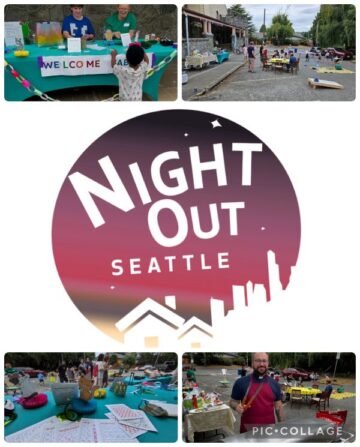
Night Out Seattle 2026!
The Journey of Becoming

Friends,
One of the first things people ask when a baby is born is, “What’s their name?”
It’s a curious question, because at that point you know almost nothing about them. You don’t know what they’ll love, what gifts they’ll discover, or what their story will become. And yet, we give them a name. We speak hope, identity, and possibility over a life that is still unfolding.
As many of you know, Kim and I recently welcomed our daughter, Zoe. Her name means “life,” and becoming a parent has reminded me that some of the most important things in life are received before they are fully understood.
That insight feels especially meaningful as I return from paternity leave and as our congregations continue discerning a shared future together.
This summer, we’ll begin a new worship series, The Journey of Becoming, exploring what it means to walk with God through seasons of growth, change, and discovery. Scripture reminds us that faith is rarely about having everything figured out. More often, it is about trusting God in the midst of becoming, learning who we are, who our neighbors are, and who God is calling us to be together.
Our first sermon, based on Romans 7:15–25 and Matthew 11:16–30, is titled “When We Don’t Know What to Call Ourselves.” Together, we’ll reflect on how faith invites us to embrace uncertainty, receive grace, and recognize the new life God is bringing forth among us.
As individuals and as a church, we may not have all the answers. But we do not walk alone. God journeys with us, and we journey with one another.
I hope you’ll join us as we take the next steps together.
Alongside you,
Pastor Paul
Pride Sunday 2026: Recognizing Marsha P. Johnson
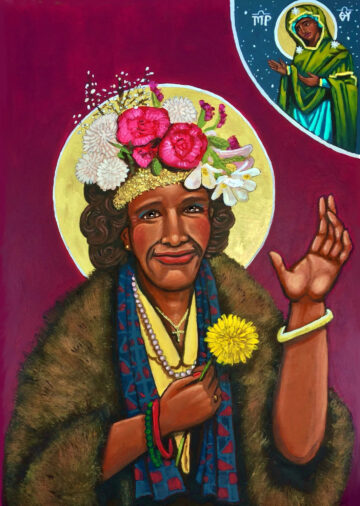
“Marsha P. Johnson” Icon by Kelly Latimore
Friends,
I’m grateful to be back with you this Sunday after paternity leave. These past weeks have been full in every way, and I’m especially excited for many of you to meet baby Zoe.
This Sunday we celebrate Pride Sunday, and we do so by lifting up the life and witness of Marsha P. Johnson.
Marsha was a key figure in the 1969 Stonewall Uprising and co-founder of Street Transvestite Action Revolutionaries alongside Sylvia Rivera. She cared for queer and trans youth, sex workers, and unhoused neighbors with radical compassion.
Marsha was unapologetically a person of faith. She prayed daily, loved the church, and said, “My spirit is filled with God’s love, and that’s what keeps me going.” Her life reminds us that holiness is not found in social status or respectability, but in love that shows up on the margins.
We’ll also celebrate our tradition of rainbow Communion bread, a sign of God’s wide table and the beauty of our many colors held in one body of Christ.
I’m looking forward to worship, celebration, and being together again with you all.
Alongside you,
Pastor Paul
God Is Proud of You: Tell in the Light

Kindred in Christ,
As summer settles into Seattle, I continue to delight in the long daylight hours. Even after several months here, I still find myself amazed by how late the evening light lingers. There is something hopeful about it—a reminder that light often stays with us longer than we expect.
Perhaps that is fitting for this week.
This Sunday, we conclude our worship series, God Is Proud of You, focused on Jesus’ words in Matthew 10: “What I tell you in the dark, speak in the light.”
We live in a time when fear, uncertainty, and division often seem louder than hope. Yet Jesus invites us to live differently—not by pretending fear does not exist, but by trusting that God’s love is greater than our fear. The gospel calls us to tell the truth, to bear witness to compassion, and to let the light of God’s love shine through our lives.
As we gather on Father’s Day weekend, we recognize that this day carries different meanings for different people. Wherever you find yourself may you know God’s presence and care.
This Sunday will be my final Sunday with Green Lake and University Gathering as Pastor Paul prepares to return from paternity leave. It has been a true joy and privilege to walk alongside you during these months. I am deeply grateful for your welcome, your openness, your commitment to justice and inclusion, and the many ways you embody Christ’s love in the world.
I hope you will join us for worship as we celebrate God’s faithfulness and continue listening for God’s call together.
Grace and Peace,
Rev. KyungHae Anna Shin
Interim Pastor