God is Proud of You: Sent as We Are
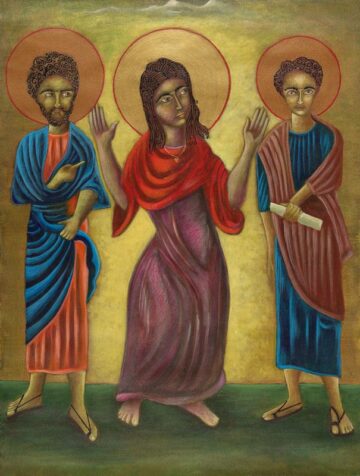
“The Proclamation” by Ceballos Fernández, Lázaro A.
Kindred in Christ,
As the days stretch longer and summer begins to settle in around us, I find myself noticing how much life happens when people gather.
A conversation over coffee. Neighbors pausing to talk on a walk. Friends sharing a meal around a table.
Community is built in ordinary moments of connection.
Perhaps that is why I am grateful for the life we share together as a congregation. Week after week, we gather to worship, serve, listen, learn, and encourage one another. In a world that often feels divided and weary, such gatherings matter more than we realize.
This Sunday, we continue our Pride Month series, “God Is Proud of You: Sent as We Are,” as we reflect on Jesus’ words in the Gospel of Matthew. Seeing the crowds who were “harassed and helpless, like sheep without a shepherd,” Jesus responds with compassion—and then sends his disciples to participate in God’s work of healing and restoration.
One of the gifts of this Sunday’s worship will be hearing from members of our congregation as they reflect on why this community matters to them and how God may be calling us forward together. As we listen together, may we recognize God’s grace at work among us and discover anew how each of us is called to participate in Christ’s healing and reconciling work.
Following worship, we will gather for our monthly sandwich-making ministry. This simple act of service has become one of the ways we embody compassion in our community. Whether you have participated before or are joining for the first time, I hope you will stay and lend a hand as we prepare meals for our neighbors.
I look forward to worshiping, serving, and growing together this Sunday.
Grace and peace,
Pastor Anna
Beloved Before Becoming
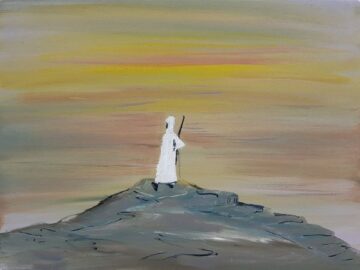
Shai Azoulay Abraham “The Culturium”
Kindred in Christ,
It is hard to believe we have already arrived in June.
One day I am convinced it is finally time to turn off the heater, and the next morning I wake up wondering if I spoke too soon. The weather has a way of keeping us humble. We never quite know what we will wake up to.
Perhaps that is true of life as well.
We all like to know what lies ahead. We like clear directions, and a sense of control over the future. Yet many of life’s most meaningful journeys begin without a map.
This Sunday, we begin a two-week Pride Month worship series, “God Is Proud of You.”
In our first message, “Beloved Before Becoming,” we will meet Abraham and Sarah as they step away from everything familiar and trust God’s promise before they know where the road will lead.
Their story reminds us that faith is not about having all the answers. It is about trusting the One who calls us forward.
As we celebrate Pride Month, we will reflect on God’s invitation to live courageously and authentically. Together, we will explore what it means to trust that we are beloved before we become.
May this season remind us that even when we cannot see the whole path ahead, God’s promise goes with us. I hope you will join us for worship as we begin this journey together.
Grace and peace,
Pastor Anna
Made From Goodness

Kindred in Christ,
As the days grow longer and the beauty of this ‘unofficial’ summer unfolds around us, I find myself grateful for the many ways new life quietly surrounds us—both in creation and in this community. Over this past month, it has been a joy to begin knowing you more deeply and witnessing the care, energy, and commitment that shape this congregation’s life together.
This Sunday, we will reflect on the opening words of Genesis through the sermon, “Made from Goodness.”
Again and again in the creation story, God pauses and calls creation good. Before fear, division, shame, or striving entered the human story, there was goodness.
Together, we will wonder what it means to live from that deep truth—to remember that we and this world were created not from scarcity or fear, but from the goodness and delight of God.
This week, I was especially encouraged while attending the Church Council meeting and witnessing thoughtful participation and shared care for the future of this community. I was particularly inspired by hearing about the Vision Team’s ongoing work to support local organizations serving neighbors who are seeking care, safety, and hope.
This Sunday, following worship, we invite everyone to join our Pride Month kick-off gathering as we celebrate the wide embrace of God’s love and the sacred truth that every person is created with dignity, beauty, and belovedness.
I look forward to worshiping with you this Sunday.
Whoever you are, and wherever you find yourself on life’s journey, you are welcome here.
Grace and peace,
Anna Shin
Interim Pastor
Pentecost Sunday: “No One Outside the Reach”
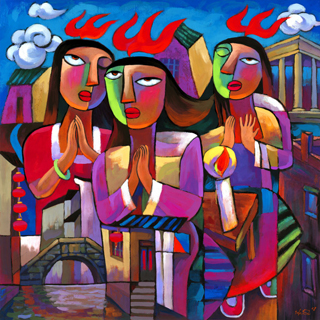
He Qi (Chinese, 1950–), “Holy Spirit Coming,” 1998. Oil on canvas.
Kindred in Christ,
This week, as I walked into the sanctuary filled with Pentecost colors, I felt a quiet joy rising again.
After a week of flooded floors, repairs, and unexpected disruption, there were still people showing up with care, generosity, and hope—decorating the sanctuary, cleaning the kitchen, checking on one another, helping things breathe again.
And honestly, perhaps that is its own kind of Pentecost.
This Sunday we celebrate the coming of the Holy Spirit—
God breathing new life into weary people.
Pentecost completes the Easter story.
The disciples who once hid behind locked doors stepped into the streets with courage and bursting joy, discovering who they were becoming together through the Spirit.
In a fragmented and exhausted world, Pentecost reminds us that God is still gathering what fear scatters.
No one is outside the reach of God’s Spirit.
As we gather on this Memorial Day weekend, we will also pause to remember with gratitude those who gave their lives in service to others, and we will pray for all who continue to serve and live in places marked by violence, conflict, and uncertainty.
It is not always easy to stay hopeful these days.
But together, we keep becoming people who choose love, courage, joy, and community.
So come worship with us this Sunday.
Come breathe deeply again.
Come, Holy Spirit.
Grace and peace,
Pastor Anna
Held Together

Kindred in Christ,
May always feels like a threshold month. School years come to an end.
Graduations and celebrations fill calendars.
Some are preparing for new beginnings, while others are quietly navigating transitions, losses, or uncertainty.
In seasons like this, I am reminded how important it is to have a faith community—
people who pray with us, walk beside us, and help hold us together when life feels unsettled.
This Sunday, we will listen in as Jesus prays for his disciples in John 17.
On the night before his crucifixion, Jesus does not leave his friends with certainty or easy answers.
He prays that they may be one—held together in love, even in a fearful and divided world.
Together we will reflect on what it means to remain connected, compassionate, and openhearted
in times that often pull people apart.
Wherever you find yourself this week—
joyful,
weary,
uncertain,
hopeful,
or simply needing a place to breathe—
you are welcome here.
Come worship. Come pray. Come reconnect with God and one another.
I am also grateful for the many ways this community continues to live out Christ’s love beyond Sunday mornings—through acts of hospitality, justice, compassion, and care for neighbors near and far.
Thank you for continuing to be a community that seeks not only to believe, but to love boldly.
I look forward to being with you this Sunday.
Grace and peace,
Pastor Anna