News
Love Forever Being Born

Kindred in Christ,
Above is a picture of one of our prayer stations, and an icon we have used during this Advent season in worship. The creator of this icon is Kelly Latimore, and it is titled, “Mary: Love Forever Being Born.”
As we continue to embrace the holy dark and expansive spaces in our lives, I invite you to read and meditate on the following poem by Sr. Ilia Delio, which inspired the creation of this icon:
“What do the stars say?
The light that meets our eyes after millions of years summons us to look beyond.
The dark that hovers over us is filled with light.
That underneath the appearance of the stable heavens is the bubbling energy of the universe.
We are forming, forming, forming and nothing can stop us.
There is a palpable power of attraction, pulling us toward we-no-not-where.
Love alone is the guide of the universe and the whole universe is in the human heart.
Tend to the heart and the power of love will name itself as God.”
Love. The universe is being born over and over. Dying and expanding. In life there is inevitably death. Yet, in death there is always new life.
Alongside you,
Rev. Paul Ortiz
Shadow and Velvety Deepness

Kindred in Christ,
I love Advent. I love the practice of lighting just one candle a week, a slow journey from darkness to light. I used to think that getting to full light was the goal, and the quicker the better! But Advent has taught me to slow down, to take my time, for the formative journey of “shadow and velvety deepness” is the true gift of this season. Advent invites us to linger in the mystery of darkness, allowing ourselves to dwell in that expansive space of the unknown in our lives, and encounter and trust God in a bigger way than when we relied solely on our own sight and understanding. May we encounter the blessing of darkness and light together this season.
Alongside you,
Rev. Paul Ortiz
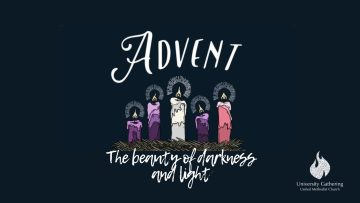
Advent 2023: The Beauty of Darkness and Light
Kindred in Christ,
As winter approaches, some of us may lament the shorter days and longer nights. But it is in the darkness that we find some of God’s greatest, most nurturing gifts. Too often has the Christian tradition exclusively associated light and whiteness with ‘good’, and darkness and blackness with ‘bad.’ The problem with this strict binary way of thinking is not only that it supports the denigration of people of color and perpetuates white supremacy, this view of darkness is also woefully incomplete. There are other images of darkness in scripture which we often fail to lift up in our worship and conversations about God.
Join us this Advent and Christmas as we look at the old stories we know well and find in them the places where sacred darkness holds us, loves us, and empowers us. From holy dark wombs to mangers at midnight to the wise ones following a star at night, this is the season to prepare our souls to seek delight in the winter nights to come.
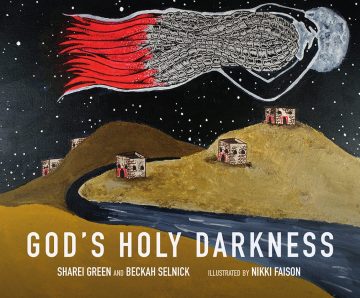
To help us go deep into this Advent theme, we will be reading God’s Hoy Darkness in worship during the first two Sundays:
Alongside you,
Rev. Paul Ortiz
Part of Something Bigger

Kindred in Christ,
During this season of thanksgiving, I give thanks for each of you and the ways you share your authentic selves with our community at University Gathering UMC. And I give thanks for the ways you contribute your time, talent, and finances for the sake of creating an inclusive church, a larger table, and greater justice in our city. This coming Sunday, we conclude our series, Running into the Future. We will reflect together on what it means to be part of something bigger than ourselves and how the act of giving can expand our vision and spiritual lives.
And in the meantime, I share with you a quote from Henri Nouwen:
“The more I think about human suffering in our world and my desire to offer a healing response, the more I realize how crucial it is not to allow myself to become paralyzed by feelings of impotence and guilt. More important than ever is to be very faithful to my vocation to do well the few things I am called to do and hold on to the joy and peace they bring me. I must resist the temptation to let the forces of darkness pull me into despair and make me one more of their many victims. I have to keep my eyes fixed on Jesus and on those who followed him and trust that I will know how to live out my mission to be a sign of hope in this world.”
– Henri Nouwen From “Here and Now: Living in the Spirit”
Alongside you,
Rev. Paul Ortiz
Prophetic Double Vision
Kindred in Christ,
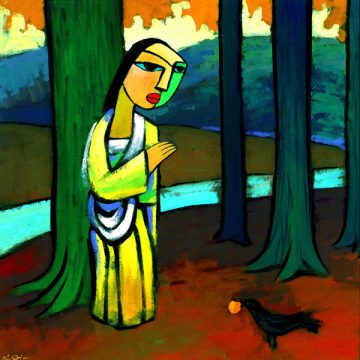
One of my favorite theologians and artists is He Qi. From Mainland China, he is a professor at the Nanjing Union Theological Seminary. His art is known to be a mix of Chinese folk art with modern art styles depicting Biblical stories in a new light. Above, his piece, Elijah and the Ravens, is a portrait of Elijah being sustained with food from God through the ravens he encountered in the wilderness (1 Kings 17).
When asked why Elijah had a face of two tones, and two eyes looking in seemingly different directions, Qi responded, “The Hebrew prophets often had “double vision.” One eye to see and call out the injustice of the present, and another eye toward the future God was calling the people toward.”
As we continue in our series, Running into the Future, we will explore what it means to rely on God to continue to sustain us, as well as give us “double vision” for the journey ahead. This Sunday, we will also welcome two new members to our congregation, Clara Too and Clara Mariño, which makes 11 new members this year! May we continue to gather and share vision with new people as we move forward together.
Alongside you,
Rev. Paul Ortiz