News
Empowerment and MLK
Kindred in Christ,
I once had a therapist that was an ex-nun. She was a progressive person of faith and considered mental health her present ministry. I greatly appreciated her on many levels.
One of the valuable things I learned from her was the importance of remembrance—both in my actions and prayer. She suggested that when I felt anxious, I should think back to a time when I felt similarly, and ask myself, “Did things turn out as bad as I had feared?”. Usually, the answer was “no.” Moreover, she invited me to reflect upon what had helped me in those past situations. It usually involved turning to prayer and reaching out to others. Remembering how God and my community had showed up in the past empowered me to turn to them in the present and caused me to be hopeful about the future.
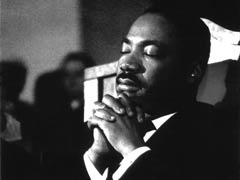
As we join our nation in remembering the legacy of Martin Luther King Jr., and the many ways God used him to help bring about greater racial equity, may we connect it to the many ways God is still calling us to advance the work of justice and liberation today. This Sunday we will explore how we can utilize prayer to remember God’s mighty works in our world, nation, and personal lives, and how this practice frees us to be part of what God is still doing today. I hope you will join us in celebrating Martin Luther King Jr. and continuing in our series, Let Us Pray!
Alongside you,
Rev. Paul Ortiz
Let Us Pray

Kindred in Christ,
Happy New Year! During this season, we often make resolutions or try new practices that will deepen our lives. And as people of faith, we are always invited to grow in our prayer lives. But what does it mean to pray? Does prayer make a difference in the world or in our personal lives? And does God even hear our prayers?
Join us for our new series, Let Us Pray, as we explore how we can learn to pray and how prayer changes everything. I hope to see you in the comments on Facebook Live!
Rev. Paul Ortiz
New Year in Covenant with God

Kindred in Christ,
As I reflect on this past year, I am most grateful for the relationships I have been blessed with (many of whom from our historic and growing church community). And as I lean into the new year, I am most excited about continuing to foster those relationships as well as making new ones! Indeed, relationships are more valuable and meaningful than any individualistic resolution or self-made goal we can accomplish in the new year. And our Wesleyan tradition teaches us this wisdom.
After joining the United Methodist tradition as a young adult, one of the things I appreciated was that the first Sunday of the new year often includes reciting Wesley’s Covenant Prayer together. This prayer attributed to John Wesley (one of the founders of Methodism), reaffirms the Covenant between God and people, and names the ways we affirm and deny that relationship. It reminds us that in the biblical tradition as well as today, God makes a covenant with us, and that a covenant is all about being in relationship.
Join us this Sunday as Rev. Judy Shultz guest preaches and helps us reflect deeper on what it means to be in covenant with God. And I (Paul) will be leading us in a reaffirmation of the covenant during Communion.
And in the meantime, check out this modern rendition of Wesley’s Covenant Prayer (by Hacking Christianity):
I am not my own self-made, self-reliant human being.
In truth, O God, I am Yours.
Make me into what You will.
Make me a neighbor with those whom You will.
Guide me on the easy path for You.
Guide me on the rocky road for You.
Whether I am to step up for You or step aside for You;
Whether I am to be lifted high for You or brought low for You;
Whether I become full or empty, with all things or with nothing;
I give all that I have and all that I am for You. So be it.
And may I always remember that you, O God, and I belong to each other.
Amen.
Rev. Paul Ortiz
With Us
Kindred in Christ,
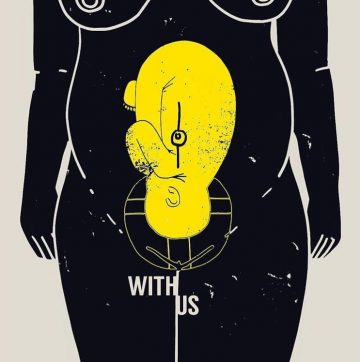
One of the things I love about Scott Erickson’s art piece, With Us, is that it invites us to reflect upon the vulnerability of the pregnancy and birthing process in relation to the coming of Christ.
What does it say about a God…
who is willing to be this vulnerable with us?
who is willing to come into this world though the statistical risk of childbearing?
who is willing to be attached by a placenta for nourishment and life from their own creation?
who is willing to wait and grow in the human womb?
who is willing to be fearfully and wonderfully made, just like us?
Join us on Christmas Eve and this Sunday, as we continue to reflect upon the power of God’s vulnerable love with us.
Rev. Paul Ortiz
A Contemporary Holy Family
Kindred in Christ,
As we enter the fourth and final week of Advent, I am reminded of how easily it is to miss the coming of God in our world. In fact, I find that the four weeks only begin to prepare our hearts and minds for what the manger means today.
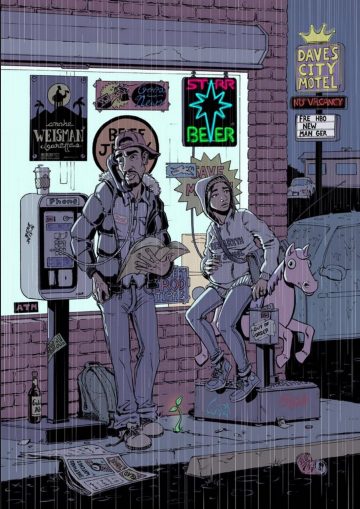
One of the things that I love about the depiction above, by Everett Patterson, titled José y Maria, is that the more time you spend looking at it, the more you’ll notice. Drawn in literary comic-book style, in shades of purple, lavender and gray, it depicts a gritty street scene with a poor young Latine couple standing on a sidewalk in front of a convenience store at night. The man has a public telephone wedged between his shoulder and ear. He looks worried. His wife rests at his side, resting by sitting sideways on a child’s mechanical pony ride. She holds a hand over her very pregnant abdomen. She looks worried too, and tired.
Are you starting to see the picture? The artist loads it with evocative hints: The woman’s hoodie reads “Nazareth High School.” A sign in the store window, advertising Starr Beer, bears a blue neon star. A poster calls out “Good News.” Around the corner, a lighted sign for Dave’s City Motel reads “NO VACANCY.” And my favorite, in a crack in the sidewalk a hopeful green shoot has sprouted between the man and woman. What other hints do you see?
Join us this Sunday, as we conclude our Advent series, Shadow and Light, and explore further what it means to see the coming of Christ in our world.
Rev. Paul Ortiz