News
What is mine to do?
Kindred in Christ,
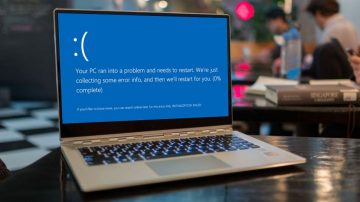
During my three years in seminary, I had a very old laptop. Whenever I dared to open multiple browsers or run various programs as I worked on my grad school assignments, I would find my computer dramatically slowing down and even crashing—sometimes tragically causing me to lose several pages worth of writing! Each time I would be reminded that my computer could not handle focusing on so many things at once. I would thus be forced to discern what was the central task I needed to focus upon in a given moment.
Lately, with the continuation of the global pandemic, the wildfires on the west coast, the decimation of Haiti, the horrors we are witnessing in Afghanistan, the degradation of the environment, and the countless other sorrows, injustices and tragedies we are hearing about in the news and on social media each day, it can cause our spirits to become overwhelmed and to crash. For many of us, spiritually crashing either looks like spiraling into despair or become callous. Yet what if each of us are not being called to place our emotional and physical energy upon all things equally at a given moment? What if we are called to discern what is ours to focus upon each day, and pray for and encourage others who are called to focus upon other things?
This is the practice of realizing that we are not at the center of all things, nor can we hold all things equally at the same time. This is the wisdom the Apostle Paul speaks of when he reminds us that we are all different members of the same body (1 Corinthians 12:12-27). The eye cannot do the tasks of the mouth, hand, foot or any of the other members, but rather must focus upon its own task of sight while supporting the other members who do a very different and equally important task of the body. What is the task you are being called to this day?
A two-part breath prayer that helps me with this daily discernment:
Inhale:
What is mine to do?
Exhale:
What is mine not to do?
Inhale:
God, bless my work this day.
Exhale:
God, bless the work of others this day.
May this simple spiritual practice empower you to do your part for the sake of compassion and justice in our hurting world, while supporting others doing different work as well. And may it help keep you from spiritually crashing.
Alongside you,
Rev. Paul Ortiz
Creation from Chaos
 Kindred in Christ,
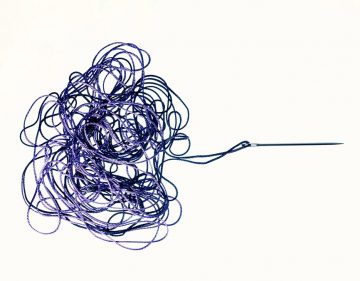
During these uncertain times, I have been reflecting upon the ways the Spirit creates beauty out of the chaos of our lives. Indeed, I remember in seminary, I learned that the creation story of Genesis speaks of the Spirit of God creating everything from the tohu wabohu, which is the Hebrew phrase commonly translated as “formless void” but can also be understood as “chaos” (Gen 1:1-2). While the idea that God can create something out of nothing is powerful, I have lately been orienting myself toward a spirituality of creation from chaos.
As the Delta variant increases and our reopening plans diminish and shift, I need a God that can bring order and life out of all the mess. As your Lead Pastor, I have been discovering beauty in connecting with you online and socially distant, gathering for online worship, meeting up with new people for coffee, hosting Printmaking Pop-up booths at our local farmers market, and being open to the many things I could not have imagined I would be doing before the pandemic. My prayer for each of you is that even through the chaos of your lives, you too will be accompanied by the Spirit to be safe, responsible, and open to the creation of unexpected beauty and encounter.
Alongside you,
Rev. Paul Ortiz
The Interests of Others

Kindred in Christ,
This past week, I got the chance to meet up with a young woman over coffee that I had originally met a week before at our first Printmaking Pop-up outreach event. Along with talking about ideas for future art events, she shared with me how the pandemic has affected her life. At one point she told me, “I find myself so much more aware of how my actions affect others; how my small choices can infect or protect my community.”
While I certainly do not believe that God causes bad things to happen, I do believe that God will faithfully lead and form us through even the worst circumstances, always moving us toward greater love of neighbor, love of self, and love of God. With all the disappointment, grief, and loss during this continued time of pandemic, and with the uncertainties we are now facing in light of the emergence of the Delta variant, my continued prayer is that this experience will force our attention outward to the suffering of the most vulnerable among us. Love always means going beyond yourself to otherness. Love always adapts to the needs of those around us. And adapting is something that after a year of pandemic we have gotten pretty good at! While I am uncertain of when it will be safe to meet fully in person, I have come to discover a spiritual foundation that casts out fear through the divine call of loving our neighbors. May you be blessed by giving and receiving this love through the many ways we gather as a church, and the many ways you show up to the community around you.
Alongside you,
Rev. Paul Ortiz
The Building is Gone, but the Church is Still Here

Kindred in Christ,
The building is gone, but the church is still here.
This past week, the large tower of our historic building came down, thus completing the major aspects of the demolition. And even as we wait with anticipation for our reimagined space to be built, which will empower us to be a community hub and connect with our neighbors in new ways, the present liminal space we find ourselves in insists to us that the church was never just a building. Even as we mourn the loss of a beloved sanctuary, we can discover delight and meaning in the stark reminder that we ourselves are the church. Or more precisely, the church is when we embody the relationships that continue to connect us to one another and to the world through the dynamic love of God. As the church, we are called to evolve and to seek to love and connect with our neighbors in new ways.
The building is gone, but the church is still here.


This past week, after months of dreaming and making new connections around the University District, our church hosted its first ever Printmaking Pop-up booth on the campus of University Heights during the farmers market. Along with having three new volunteers helping us run the booth, we connected and created art with approximately 30 of our neighbors. There was much joy as we facilitated a space for our neighbors to express themselves and make their own custom prints on cardstock paper or tote bags. Many shared with us why the particular art piece they chose was meaningful to them. We listened and told stories to one another as we connected over art making. And I got a chance to talk about the exciting things our church is doing in the neighborhood. We handed out flyers and had several people sign up for more information on upcoming events.
I hope you will consider joining us for our next Printmaking Pop-up on Aug 14, again on the campus of University Heights (more info coming soon). And I hope you will continue to connect through online worship and the many other ways our church continues to show up in the world. And most of all, my prayer for you is that you will rely ever more on the reality that our building may be gone, but the church (you and I) are still here.
Alongside you,
Rev. Paul Ortiz
Printmaking Pop-Up

Upcoming U Gathering Printmaking Pop-ups
Join us on Sat. Aug 5th, 11a-1p, on the campus of University Heights Center (University Heights Center, 5031 University Way NE, Seattle, WA 98105, USA) for our next Printmaking Pop-up! This is a free family event where you can print a free custom tote bag. We will be right next to the U District Farmers Market, so plan to grab a snack and join us for some art making fun!!
This event is free, and all materials will be supplied!